
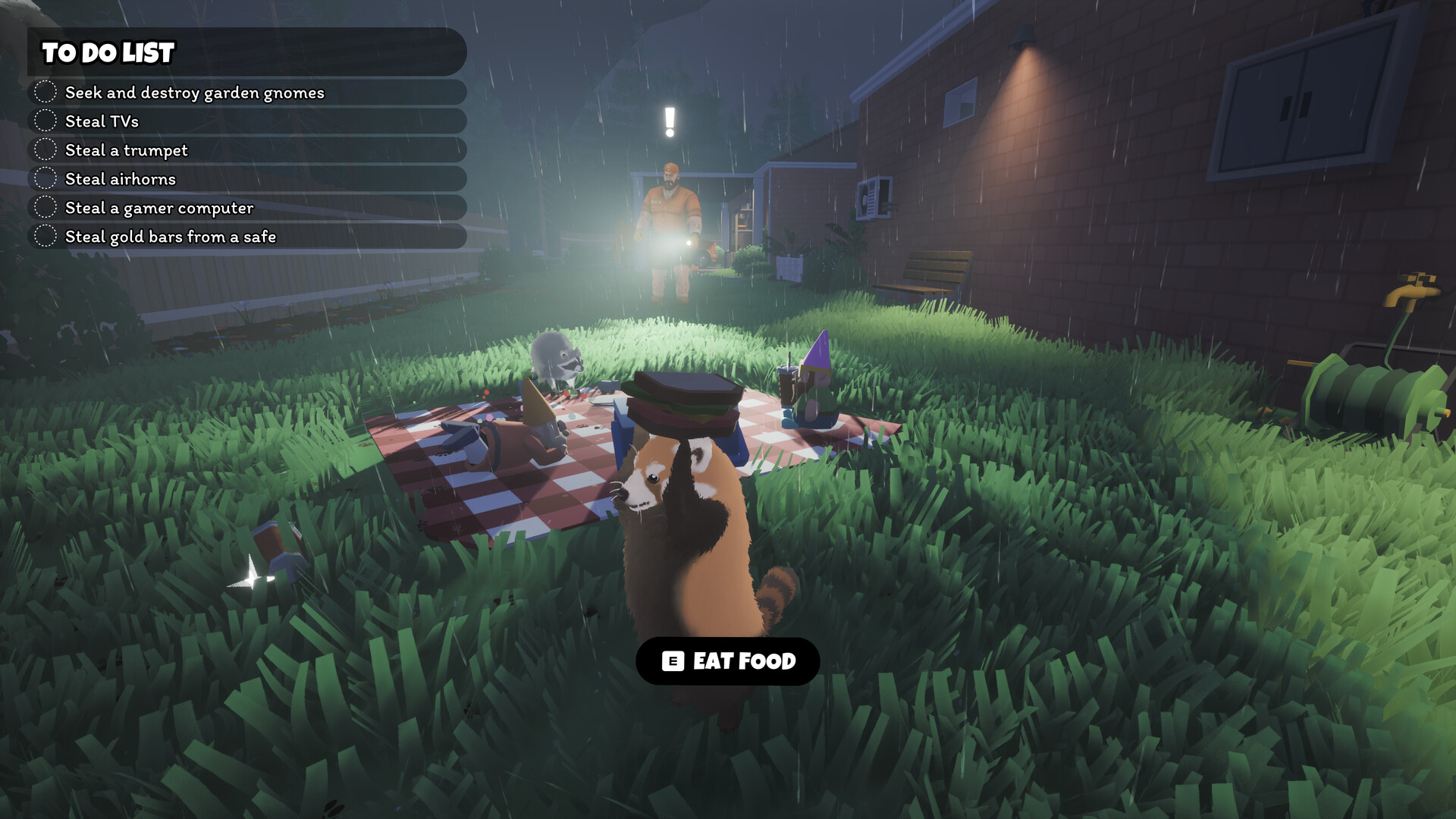
The demo is a tutorial plus two jobs, played across three areas: a forest training ground, a suburban house and a farm. That is the whole of it. No hour count has been published by the developer or the publisher, and the real figure depends on how much your group enjoys throwing things.
A group that plays straight through the objectives will see all three areas in a single sitting. A group that spends twenty minutes trying to get a couch onto the roof will not.
The three areas, in order
1. Forest training ground. The tutorial. Climbing, vent crawling, carrying, throwing, and the first explanation of how noise draws attention. It is the area that teaches the verbs the other two rely on.
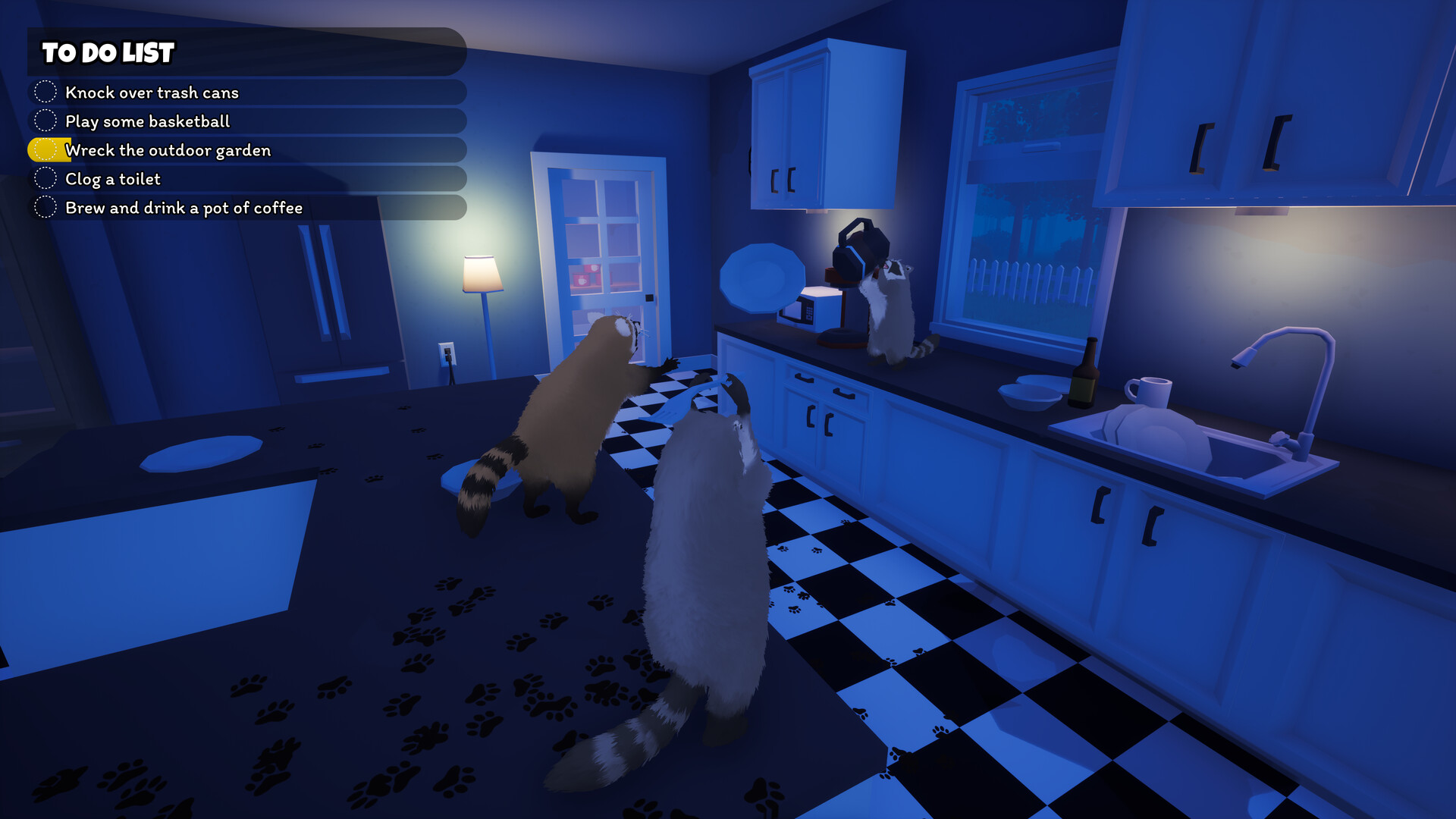
2. Suburban house. The first real job. Indoor and outdoor space, a garden to ruin, a kitchen with a coffee machine, and the first Exterminator patrol. This is where most players learn that a broken window is loud.
3. Farm. The widest area, with animals in it. The farm is where the game's comedy lands hardest and where a group first discovers that a captured teammate has to be physically rescued while the rest of the job continues.
Why the demo feels longer than its content
Three areas is not much map. What extends it is the mission list. Each job carries a set of optional mischief objectives — knock over the bins, block the toilet, brew a coffee — and they are scattered enough that a thorough group will replay an area to find the ones they missed.
Four-player co-op multiplies that. A solo run is quieter and faster; a four-player run is loud, and loud means the Exterminator arrives, and the Exterminator arriving means the plan changes.
What is locked and why that matters for length
The shop and most reward systems are disabled in the demo. Hats, hideout decoration and upgrades are visible as a promise rather than a progression system you can push.
The practical effect: the demo does not have a grind to fill time with. Once the objectives in an area are done, there is nothing left to unlock in it. That is why the three areas read as a slice rather than a small game.
What the demo does not tell you about the full game
- How long the campaign is. No chapter count or area count has been published.
- Whether progress carries over. Nothing announced suggests it does.
- How hats unlock in the full game. The demo shows cosmetics, not the ability system that arrives with the hideout.
- Whether later areas add mechanics. Everything past the farm is unplayed outside the studio.
A realistic time budget
Without an official figure, the useful way to plan is by area rather than by clock.
The tutorial is short and mostly instructional: it ends when the game stops explaining and starts asking. The house is the first real job and the one that takes longest on a first run, because the loot loop, the noise system and the first patrol all arrive at once. The farm is wider and usually faster on a second attempt, once the group knows that carrying is the bottleneck rather than the objectives.
A group that plays all three areas once, completes the visible objectives and does not replay will see everything the demo holds. A group that replays the farm with four players will get more out of it than a group that rushes the tutorial to reach the house.
What decides whether you replay
Two things: whether the physics is funny to you, and whether the objectives list has enough optional mischief to hunt. The first is taste. The second is content, and it is the part that turns a twenty-minute slice into an evening.
If a second run through the house feels like a chore, the full game's progression probably will not fix that, because the progression is built on the same loop rather than on new verbs. If it feels like a rematch, the full release is a longer version of something you already like.
How to get the most out of it
Play the farm last, with four people. It is the area with the most moving parts and the one where co-op communication matters most.
Try solo after a group session. The same job plays differently with one raccoon, and the difference tells you whether the game holds up when friends are offline.
Time your own run. Since no official figure exists, your own session length with the objectives completed is the most useful number you can produce, and it will be closer to your experience than any article's estimate.
No end date
The demo has been available since October 19, 2026, and no closing date has been announced. There is no rush, and no reason to play it before you have a group.
The short answer
Three areas, two jobs and a tutorial, no published hour count, and a locked shop that stops the demo from turning into a grind. Plan for one evening with a group, or two shorter solo sessions, and you will have seen everything it holds.