
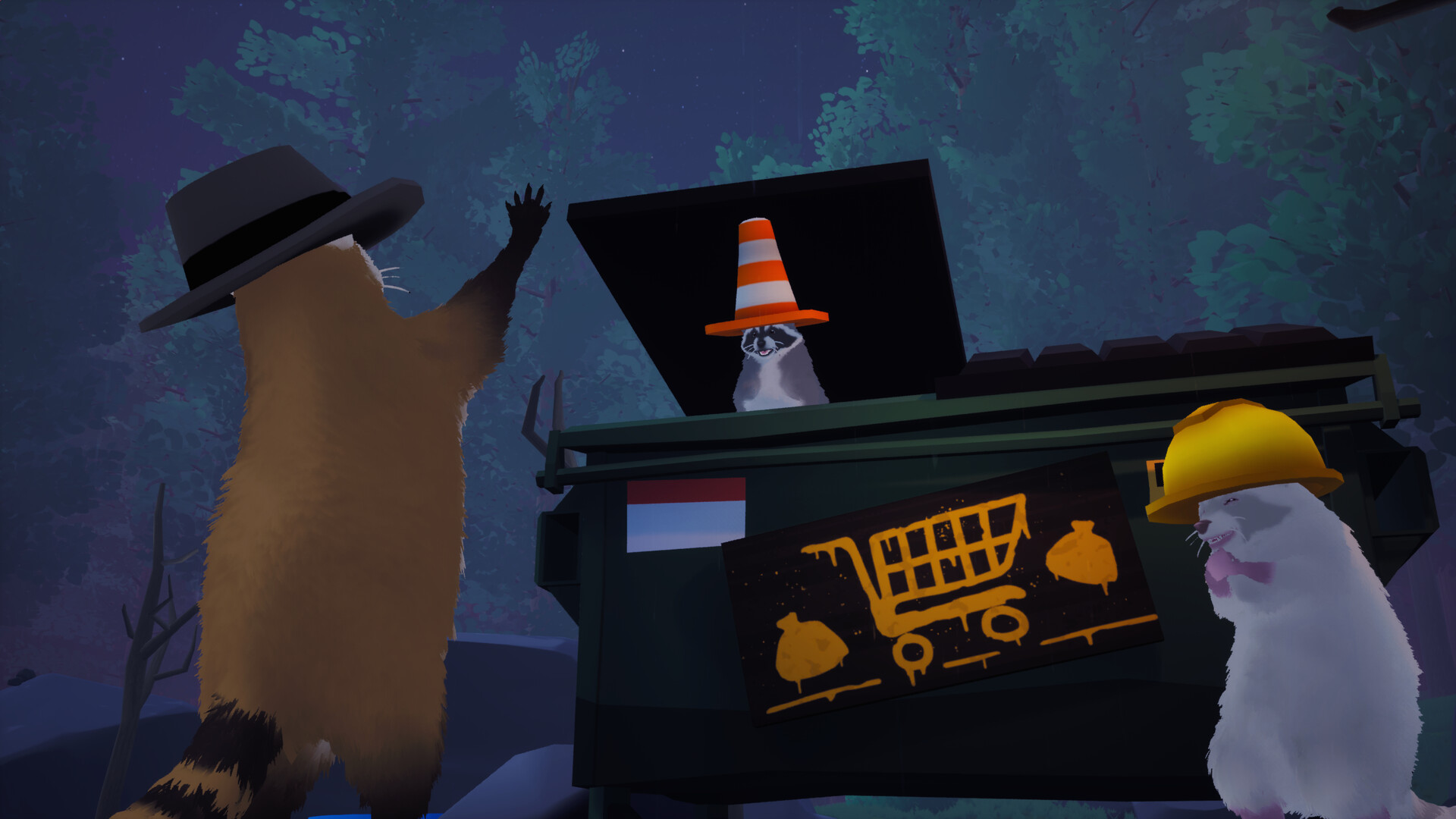
Dumpster Gang's hats are not a cosmetic system with a stat attached. The publisher describes them as hats with unique abilities, unlocked at the hideout and worn into the next job. Each one changes something about how a raccoon moves or works.
One example is confirmed in preview coverage: a hat that raises jump height. Everything else about the hat list is unannounced, and no reliable source publishes names, costs or numbers.
The hideout is where the hat lives
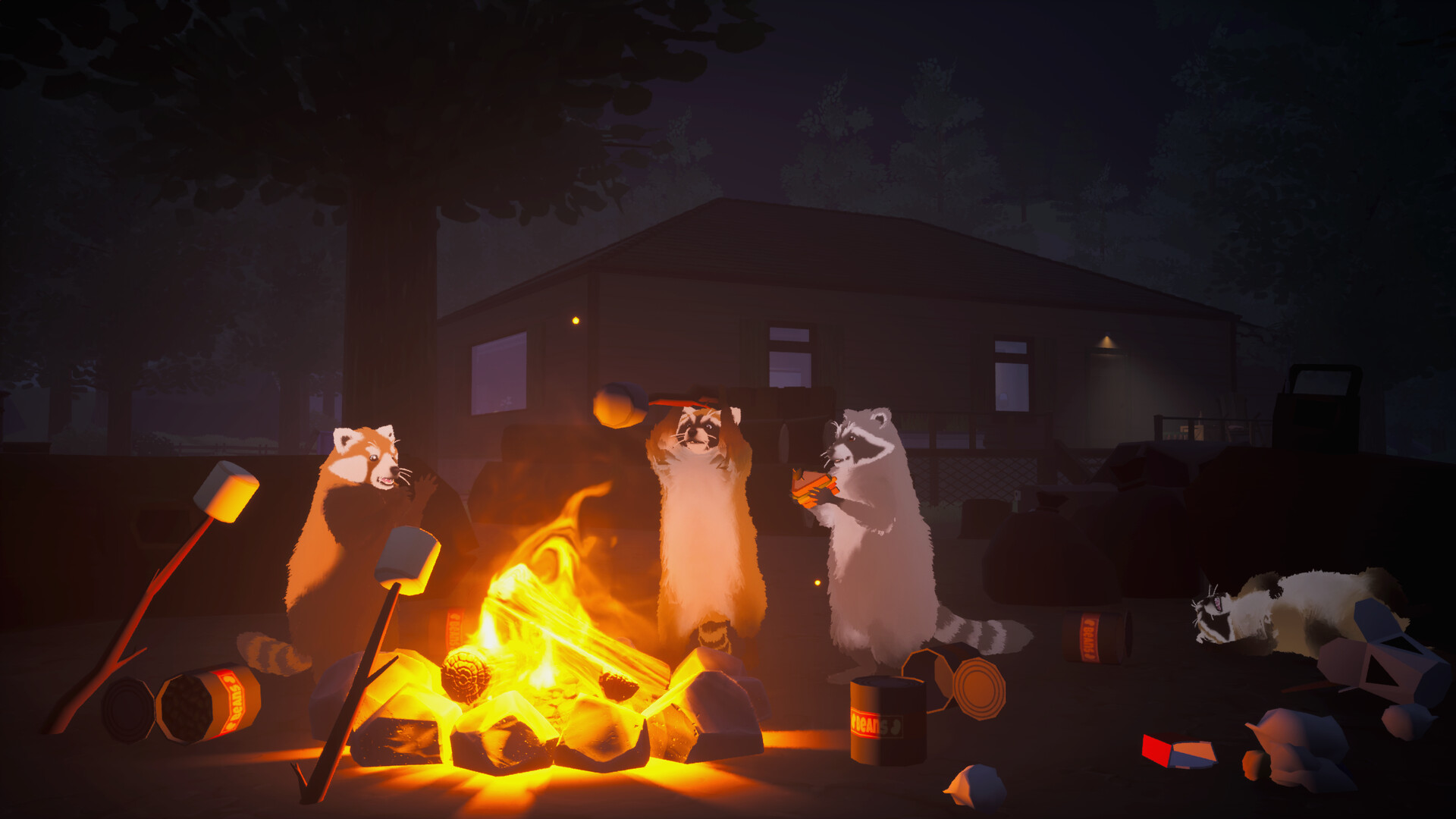
Every job ends back at the hideout, the burrow under the yard where stolen loot accumulates. That is where raccoons are customised, hats are unlocked and the den is decorated with whatever came home in the last run.
Two things follow from that structure:
- Hats are progression, not a shop purchase. The unlock loop runs through playing jobs and bringing loot home, not through a store.
- The hideout is where you change your build. If a job needs a different movement ability, the change happens between jobs rather than mid-run.
Why an ability hat beats a cosmetic hat
In a game where the level design is vertical, movement abilities are content. A raccoon that jumps higher can reach shelves, rooflines and vent mouths that a normal raccoon cannot. That turns a cosmetic slot into a routing tool.
Think of it as three tiers of value:
- Mobility — jump height, climb speed, fall control. These change which routes exist.
- Carrying — anything that makes heavy loot less punishing. These change how much a job is worth.
- Utility — anything that helps with noise, rescue or the Exterminator. These change how a job is played.
Mobility comes first because it compounds: every area has vertical space, and the demo's three areas all reward the raccoon who can get up without using a door.
What to prioritise in the demo
The demo keeps the shop locked, so hat abilities cannot be unlocked inside it. What the demo does show is the cosmetics side: a small selection of skins and emotes.
That means the hats page is a launch-day question for most players, not a demo question. When the full game arrives, the first job is to find out what the unlock currency actually is — loot value, mission completion or something else — because that decides whether hats are a grind or a natural byproduct.
Why mobility first, in each area
The demo's three areas show the argument better than any list could.
The forest training ground is built around climbing and vents. A raccoon with more jump height reaches the training routes without using the marked path, which is a preview of how the rest of the game treats vertical space.
The suburban house has a roof, a garden wall and a second floor. Getting up without a door is quieter, and getting down without stairs is faster when something is chasing you.
The farm is the one place where carrying matters as much as mobility: wide open ground, heavy loot and a long walk back to the burrow. A mobility hat helps you find the route; a carrying hat helps you use it.
That is why the order is mobility, then carrying, then utility. The first makes routes exist, the second makes them profitable, the third makes them safe.
How to test a hat properly
Take the same job twice: once with the new hat, once without. The difference that matters is not speed, it is whether a route opened up that was closed before — a shelf reached, a vent entered, a fence cleared without a detour.
If a hat only makes the same route slightly faster, it is a convenience. If it creates a route, it is content.
Choosing a hat for a four-player gang
In co-op, hats become a role decision. Four raccoons wearing the same mobility hat cannot carry a sofa; four wearing carrying hats cannot reach the roof.
A composition that covers the map:
- One high-mobility raccoon for scouting routes, vents and the roof.
- One carrying raccoon for the heavy loot and the extraction run.
- One utility raccoon for noise control, distractions and rescue support.
- One free slot that flexes to whatever the job needs.
That is a plan, not a rule. The game does not enforce roles, and a group that all takes the same hat will still finish jobs — just later and louder.
What is still unknown
- The full hat list. No names, no count, no icons.
- Unlock costs. Whether a hat costs loot, currency or mission progress has not been described.
- Whether hats are swappable mid-job. The hideout is the place they are unlocked, which suggests between jobs rather than mid-run.
- Whether hats have downsides. A jump-height hat that costs something would change every recommendation above.
Do not chase a list yet
No verified hat list exists. Anything presented as a complete tier list before launch is a guess wearing a table.
The short version
Hats are the game's ability system, unlocked at the hideout and worn into jobs, with jump height confirmed as one effect. Prioritise mobility, then carrying, then utility. In a four-player gang, split the hats by role rather than stacking the same one.